


The best way to build charisma is to stack it on top of the skills and competence you already have. Five things make the biggest difference: staying authentic, mirroring the other person’s body language, genuinely caring, giving specific feedback, and communicating clearly. Charisma alone gets people promoted. Charisma on top of real competence is where the magic happens.
The biggest cheat code for success in the corporate world, and quite frankly in the world in general, is to max out your charisma.
We’ve all seen it. The smooth talker comes in, gets the promotion or gets hired from the outside, and the second they start rolling, you realize, oh, this guy doesn’t know anything. Completely unqualified. But man, he’s fun to talk to.
That’s extremely frustrating. But here’s the thing. Your superpower is taking all of your skills, your knowledge, and your competence, and then building charisma over the top of it.
That’s where the magic happens.
What Is the Charisma Stack?
The charisma stack is the idea that charisma works best when it’s built on top of real skill and competence, not used as a replacement for it. Competence earns respect. Charisma gets people to notice it.
Here are five things you can stack right on top of the skills that made you great at what you do today.
- Be Authentic: Be Yourself, but Better
The first thing, and one of the most important, is to be authentic. You want to be yourself, but better.
That means you’re going to have to keep learning new skills, and we’ll get into those. But you have to genuinely be yourself.
Early in my career, I looked up to a leader with a military background. He was a phenomenal leader, so I tried to lean into his style. Being direct, giving orders. Not in a harsh or brash way, but it just didn’t feel comfortable. And I could see the looks on my team’s faces. What is Sean doing? Who’s he trying to be, our big boss over there?
Don’t try to act like somebody you’re not.
You can take specific skills or traits from a leader you respect and admire and work them into who you are. But you can’t copy. Stay true to yourself, or people will pick up on it. It’s off putting, and they’ll tune you out completely.
- Mirror Their Body Language
This one we see people do all the time without really recognizing what’s happening in the moment.
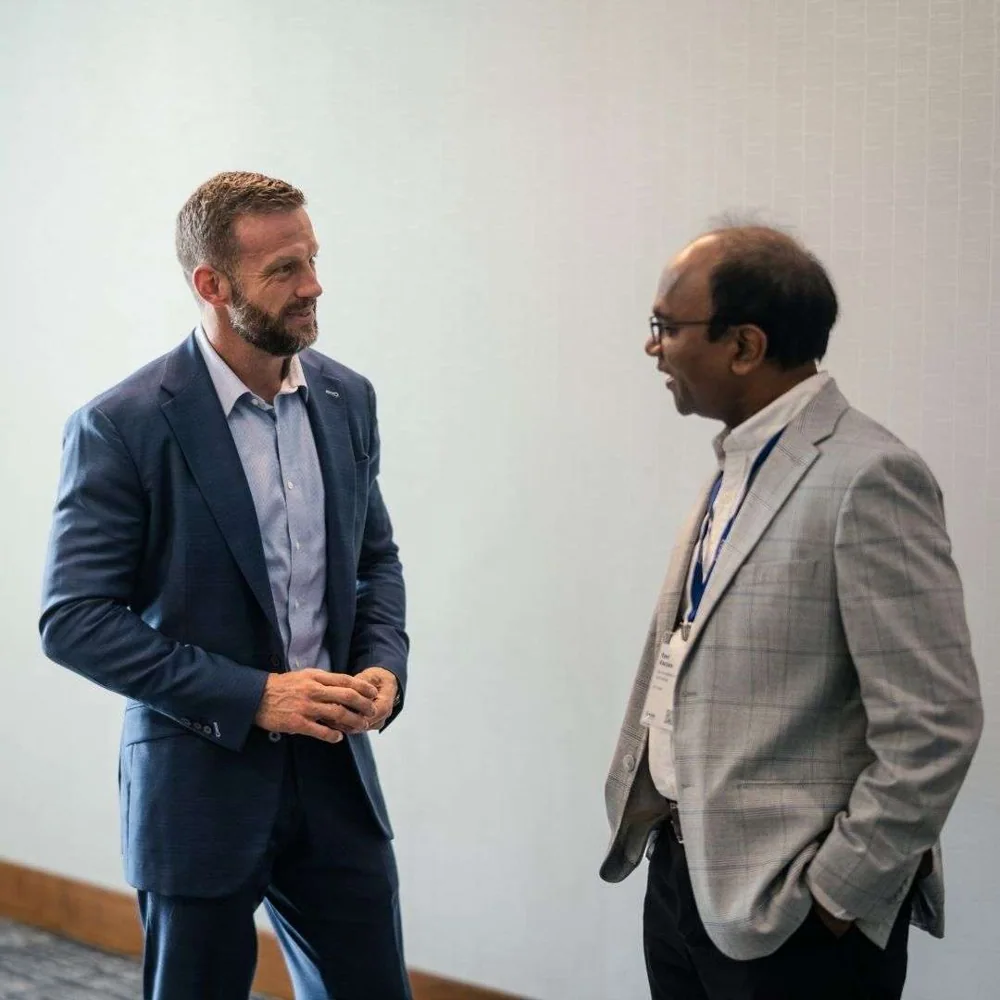
Be aware of your body language when you’re talking with someone. Mirror their demeanor, their body language, and their actions as much as you can. That means paying close attention to them and how they’re communicating with you.
If someone walks up as a ball of energy and excitement, match that energy. If you shrink down, how do you think they’re going to respond? Are they going to see you as a strong, captivating leader?
On the flip side, if you’re talking with somebody who’s a little more timid, shy, or reserved, don’t come at them with a lot of heat. You’ll scare them off.
Pay attention to the other person and mirror them as much as you can. This works a lot like matching the energy of the room, which I’ve written about before.
- Genuinely Care
While they’re talking to you, genuinely listen. Lean in. Care. Listen to understand, not just to respond.
Leaders who genuinely care are the ones people tend to follow. We’ve all seen the other kind. They listen, they act, but they don’t really care. They just move on to the next thing.
What Does It Look Like to Genuinely Care as a Leader?
I think it starts with being empathetic. If someone is struggling with a project, or something in their personal life, or they’re just processing through some things, listen.
It’s okay to pause. Sit there and let them get it out. Sometimes people will get a little choked up. That’s okay. Encourage them.
If you start getting uncomfortable and uneasy when somebody else is struggling, it signals to them that this isn’t a safe place, and they’ll shut down.
This is one of the things that has given me disproportionate returns in building teams. When somebody is struggling, I sit down with them. I go through it with them. I feel the frustration along with them. And people feel like, okay, Sean’s in this with me. This whole thing sucks, but we’re in it together.
I don’t know if some people are just wired to care more than others. But if you take a little time and lean into it, you’ll build so much trust, respect, and rapport. More people will want to follow you and support you, and that’s how you have a bigger impact on the world.
- Give Specific Feedback
Another important piece is being able to give specific feedback. That means you’re going to have to have uncomfortable conversations sometimes.
Nobody likes those. But what you’ll find is that if you genuinely care and give real guidance on how someone can take it to the next level, or how they can work through a problem, they’ll come to you more. They’ll come back for feedback and guidance, and they’ll start telling others about it.
Man, I broke down in front of Sean. I was really grappling with this thing. He genuinely cared, he gave me real guidance, and he told it like it was.
The more you do this, the more you see how powerful it is. So many people are craving feedback. They want to know whether they’re doing a good job or a bad job, and how they compare to their peers. I believe everybody wants to do a good job.
Are there some people who are lazy and couldn’t care less? Absolutely. The world is full of them, and you probably don’t want them on your team. That’s a conversation for another day.
But when you have people who are genuinely trying, and you care enough to give them specific, targeted feedback on what to do next, they’re going to appreciate it.
- Sharpen Your Communication Skills
The last one is arguably the most important. Your communication skills.
If you can’t make it through a single sentence without saying um or uh or right or you know, people will have a hard time following you.
I was horrible about this. When I first started standing up in front of a room full of strangers, or even peers, to talk through a presentation, I was so nervous and afraid.
What I appreciated about the first public speaking course I took is that they gave me real feedback. Basically, Sean, bro, you’ve got to work through this, my man. Your hand gestures are amazing, you’re fantastic at using your hands, but get rid of those filler words.
Eliminate filler words. Make and hold eye contact. Use hand gestures. Carry yourself with posture that shows confidence, head up and shoulders back. All of a sudden, these things start to mesh together, and you become a captivating, charismatic person. I broke these down in more detail in my executive presence tips.
How Do You Learn Charisma From Other People?
The interesting thing about charisma and presence is that they’re clear and a little bit nebulous at the same time.
We can say, oh man, Jay is so charismatic. He’s got this presence. But we rarely take the time to break down what Jay actually does that makes us feel that way.
So start analyzing it. What is it that they do that makes me feel this way? Then go do that thing.
Why Charisma Is a Cheat Code for Your Career
Once you start building these skills in a structured way, you’ll see how quickly you can become charismatic and have that executive presence.
And once you do, it’s a cheat code for life. Doors start opening faster than you can walk through them.
I know you’re thinking, come on Sean, really? Yes, really.
Go back to the smooth talker from the beginning. Promotion, promotion, raise, raise. I’m flashing back to a former life where I watched a director of one function get promoted to SVP, fail his way out of that role and get terminated, and then get hired somewhere else as a chief operating officer. He wasn’t good at the job. He fumbled his way to the top because he was such a smooth talker.
I can’t stress this enough. I can’t wrap my head around why more people don’t focus on this. If charisma can carry somebody that far without the competence, imagine what it can do stacked on top of yours.
Figure out how to learn and develop these skills as quickly as you can. That’s what’s going to open all those doors.
Frequently Asked Questions About Building Charisma
Can charisma be learned?
Yes. Sean Barnes breaks charisma down into five learnable skills: being authentic, mirroring body language, genuinely caring, giving specific feedback, and communicating clearly. Building them in a structured way makes charisma something you can develop, not just something you’re born with.
What is the most important part of being charismatic?
Authenticity. You can borrow specific traits from leaders you admire, but trying to copy someone else’s style comes across as off putting. The goal is to be yourself, but better.
How does mirroring body language build charisma?
Matching the other person’s energy and demeanor helps them feel understood. Bring more energy to an excited person and less intensity to someone shy or reserved, so they stay comfortable and engaged.
Why do smooth talkers get promoted over more qualified people?
Charisma makes people want to listen and follow, and it often gets noticed before competence does. Sean’s point is to use that to your advantage by building charisma on top of real skill, instead of relying on either one alone.
How does giving feedback make you more charismatic?
When you genuinely care and give specific guidance, people trust you, come back to you, and tell others about the experience. Most people want to know how they’re doing, and leaders who tell them honestly earn loyalty.
What’s the difference between charisma and executive presence?
They overlap heavily. Both come from skills like clear communication, eye contact, confident posture, and reading other people. Sean treats them as two sides of the same set of learnable behaviors.
Build Charisma on Top of What You Already Do Well
Wolf Executives works with directors and senior leaders across Houston who have the competence and want the presence to match it. If you want help building the skills that open doors, let’s have a conversation.
About the Author
Sean Barnes is the founder of Wolf Executives, a Houston based executive coaching and leadership development firm, and host of The Sean Barnes Podcast. He spent two decades in progressive leadership roles across IT, human resources, ESG, safety, and transportation, and has guided organizations through dozens of acquisitions and integrations as well as two IPOs. Today he coaches directors and senior leaders through the transition into vice president level roles and beyond, and speaks at 40 to 50 conferences and executive events a year across North America as a keynote speaker and conference chair.